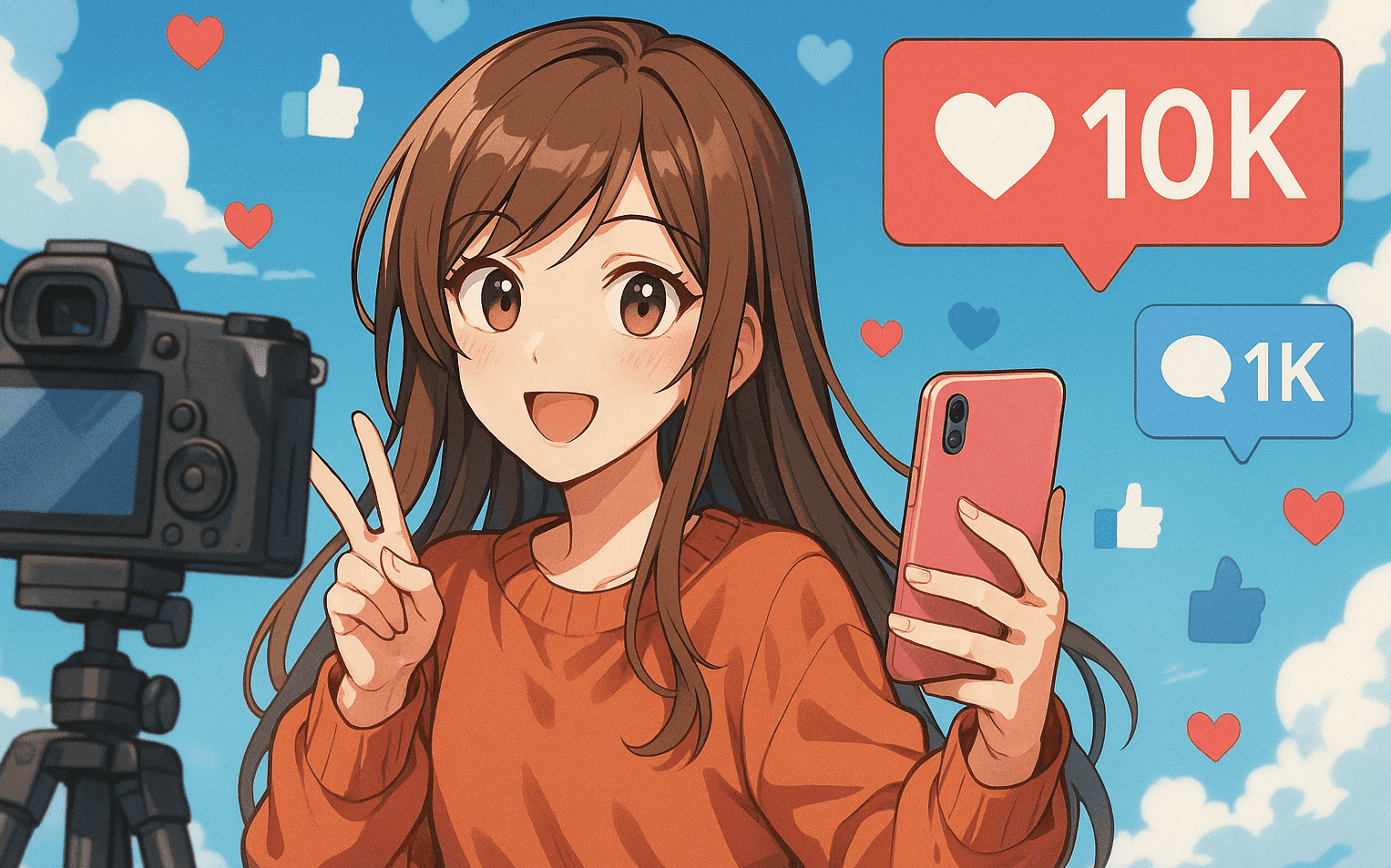
In 2023, a 22-year-old college dropout named Alix Earle posted a casual TikTok about a mascara she liked. No script. No studio lighting. Just her bathroom mirror and an honest opinion. That single video generated over $1 million in tracked sales for the brand within 48 hours. The mascara sold out at Sephora nationwide. Traditional advertising would have cost ten times that budget for a fraction of the result. That gap between old-school ad spend and creator-driven commerce explains why social media and influencer outreach now absorb roughly $21 billion annually in the US alone, according to Influencer Marketing Hub's 2024 benchmark report.
The shift is structural, not trendy. People trust people more than they trust logos. A 2023 Nielsen study found that 92% of consumers trust recommendations from individuals over branded content, even when they know the individual has a commercial relationship with the brand. Understanding how social platforms distribute content, why certain creators move purchasing decisions, and how to measure the real return on these partnerships gives you a working knowledge of the most consequential shift in marketing since the search engine.
How Social Platforms Actually Distribute Your Content
Every social feed is a prediction engine. The platform watches what each user pauses on, replays, shares, saves, and comments on, then ranks new content by how likely it is to trigger those same signals from that specific person. The mechanics vary by platform, but the underlying logic stays constant: content that earns early engagement gets shown to more people. Content that does not earn early engagement dies quietly.
This matters for marketers because reach is not bought with followers. It is earned per post. A TikTok account with 800 followers can generate 2 million views if the first 200 people who see the video watch it twice. A brand Instagram account with 500,000 followers can post a polished product shot and reach 3,000 people if nobody interacts. The algorithm does not care about your follower count. It cares about behavioral signals from real humans in real time.
Algorithms rank content by engagement velocity, not follower count. A post from a 1,000-follower account that earns 200 saves in its first hour will outperform a post from a 1-million-follower account that earns 50 saves in the same window. Build for signals, not for vanity metrics.
The signals that matter most differ by platform. TikTok weights completion rate and replays heavily, which is why short, looping videos with a "wait for it" payoff spread so fast. Instagram weights saves and shares for Reels, while carousel posts earn distribution through swipe-through rate. YouTube Shorts uses a similar completion-rate model to TikTok, but long-form YouTube videos reward watch time in minutes, not percentages. LinkedIn rewards comments, especially lengthy ones, because its algorithm interprets long comments as proof that the content sparked genuine professional conversation.
Platform Comparison: Where Each Channel Delivers
Choosing the right platform is not about chasing the newest app. It is about matching where your specific audience already spends attention with what your content does best. A fitness brand selling resistance bands and a SaaS company selling project management software should not run the same playbook on the same platforms. The audience behaviors, content expectations, and conversion paths differ fundamentally.
TikTok remains the discovery engine. Its "For You" feed pushes content to people who have never heard of you, which makes it the single best platform for awareness at zero ad spend. The average engagement rate for brand content on TikTok sits near 5.69% according to Socialinsider's 2024 data, roughly five times the rate on Instagram feed posts. The catch: TikTok audiences skew younger (60% are 16 to 24), attention spans are measured in fractions of seconds, and the platform's commerce infrastructure is still maturing in Western markets. Hooks must land in the first 1.5 seconds. On-screen text matters because roughly 80% of TikTok sessions occur with sound off.
Instagram is the hybrid. Reels compete with TikTok for short video discovery. Carousels compress education into swipeable slides and earn saves at rates 1.4 times higher than single images. Stories drive urgency through 24-hour expiration. Shopping tags create direct purchase paths. Instagram's audience is broader (25 to 34 is the largest segment), and its infrastructure for brand partnerships is more developed through the Creator Marketplace, which shows brands verified audience demographics before they commit budget.
YouTube serves two very different purposes. Shorts compete in the short-video discovery space with completion rates as the primary ranking signal. Long-form YouTube, though, is where trust compounds. A 12-minute product review that ranks for a search query can generate sales for years. YouTube is the second-largest search engine, and 68% of consumers say they have been influenced by a YouTube video before making a purchase, per Google's own research. If your product requires explanation, YouTube is not optional.
LinkedIn punches above its weight for B2B and professional audiences. Organic reach on LinkedIn still rewards quality in a way that other platforms abandoned years ago. A well-written text post from a personal profile can reach 10,000 to 50,000 people without a dollar in ad spend, especially if it earns comments in the first 90 minutes. For brands selling tools, services, or education to professionals and students transitioning into careers, LinkedIn is underrated.
X (Twitter) and Facebook sit at opposite ends of the spectrum. X remains useful for real-time conversations, news cycles, and seeding ideas that ripple into other channels, but its organic engagement has declined since 2022. Facebook organic reach for brand pages has collapsed to roughly 0.06%, making it essentially a paid-only platform for brands. However, Facebook Groups remain powerful for niche communities, and Facebook Marketplace drives significant local commerce.
Micro vs. Macro Influencers: The Economics of Creator Partnerships
Here is where most marketing teams get it wrong. They assume bigger is better. A creator with 2 million followers must be more valuable than one with 15,000, right?
The data says otherwise.
Influencer Marketing Hub's 2024 benchmark report breaks it down cleanly. Nano influencers (1,000 to 10,000 followers) average a 7% engagement rate on Instagram. Micro influencers (10,000 to 100,000) average 3.5%. By the time you reach mega influencers with over a million followers, the engagement rate drops below 1%. That is not a small difference. A nano influencer's audience interacts with their content at nearly eight times the rate of a mega influencer's audience.
Why? Intimacy. A creator with 8,000 followers knows their comment section. They reply to questions. They remember recurring usernames. Their recommendation feels like advice from a friend, not a billboard. A creator with 3 million followers, no matter how talented, is broadcasting. The relationship is parasocial, not personal.
Cost per post: $100 - $1,000
Engagement rate: 3.5% average
Conversion strength: High, especially in niche categories
Content feel: Authentic, native to feed
Best for: Driving purchases, building trust in specific communities, generating UGC for paid amplification
Risk: Lower reach ceiling per post; requires managing more partnerships
Cost per post: $5,000 - $100,000+
Engagement rate: 0.9% - 1.1% average
Conversion strength: Moderate, best for awareness
Content feel: Polished, closer to traditional advertising
Best for: Brand awareness campaigns, product launches, reaching broad demographics quickly
Risk: High cost, lower per-dollar engagement, audience overlap with other brand deals
The smart play for most brands is a portfolio approach. Allocate 60-70% of your influencer budget to micro creators who drive measurable conversions in specific niches. Reserve 20-30% for one or two larger creators who generate awareness spikes during launches or seasonal moments. Keep 10% for experimental partnerships with rising creators who show strong engagement trajectory but have not yet been approached by competitors.
Daniel Wellington, the watch brand, built a $200 million business almost entirely through micro influencer partnerships. They sent free watches to thousands of small Instagram creators between 2014 and 2018, each with a unique discount code. No mega celebrity deals. No Super Bowl ads. Just consistent micro-creator activation at scale, tracked by code. The cost per acquisition was a fraction of what traditional advertising would have demanded, and the user-generated content became a perpetual content engine for their own feed.
Measuring ROI: What to Track and What to Ignore
Vanity metrics kill budgets. A post that gets 500,000 views and zero conversions is not a success. It is expensive entertainment. The challenge with social media and influencer measurement is separating signal from noise in a channel where "going viral" can mean everything or nothing depending on who actually watched.
Start with the distinction between awareness metrics and performance metrics. Awareness metrics include reach, impressions, video views, and brand lift. They tell you how many eyeballs saw your message. Performance metrics include link clicks, site sessions, add-to-carts, trial starts, and purchases. They tell you how many people actually did something after seeing your message.
Choose the single metric that matters most for this campaign. Trials? Orders? Email signups? Everything else is supporting data.
Every creator gets a unique UTM link and discount code. The UTM tracks digital clicks in GA4. The discount code captures "dark social" conversions where someone saw the video, then typed your URL directly.
Divide total creator cost (fee + product + shipping) by the number of primary outcomes tracked. Compare this against your other acquisition channels.
Creator content does not stop performing on post day. Monitor 30-day and 90-day cumulative results. Some videos generate 70% of their conversions in week two through four as the algorithm resurfaces them.
If the creator's video is strong enough to use as a paid ad (with permission), calculate what equivalent studio-produced content would cost. Many brands find that creator content outperforms professional ads by 2-3x in paid placements.
The cost per acquisition (CPA) through influencer marketing averaged $20 to $35 across e-commerce brands in 2024, according to Aspire's creator economy report. Compare that to the average CPA through Meta Ads ($28 to $45) or Google Ads ($40 to $60) in the same period. The unit economics favor influencer partnerships, especially when you factor in the secondary value of the content itself being reused as paid creative.
One metric that matters more than most teams track: earned media value (EMV). When a creator's post about your product generates organic shares, reposts, duets, or stitches from their audience, that secondary reach is essentially free. Glossier built much of its early growth on this flywheel. Their micro influencer posts generated so much organic conversation that their earned media value consistently ran three to four times higher than their paid creator spend.
Organic Content Strategy: Earning Reach Without Ad Spend
Paid amplification is powerful, but the brands that win long-term on social media build an organic engine first. If your organic content consistently earns engagement, your paid spend becomes a multiplier rather than a crutch. If your organic content falls flat, throwing money at it just means more people see something they do not care about.
The formula for organic reach is deceptively simple: promise a specific outcome in the first 1.5 seconds, deliver on that promise within the content, and make the next step obvious. Every scroll-stopping post, whether it is a TikTok, a Reel, a carousel, or a LinkedIn text post, follows this pattern.
Duolingo's TikTok account grew from 50,000 to over 10 million followers in 18 months without a single paid post. Their strategy was absurdly simple: they turned their owl mascot into a chaotic, unhinged character that commented on trending sounds and pop culture moments. The content had almost nothing to do with language learning. But it built brand awareness so effectively that Duolingo's daily active users grew 62% year over year during the same period. The takeaway is not "act weird on TikTok." It is that organic social content earns reach by entertaining or educating first, and connecting to the product second. The mascot reminded people that Duolingo existed every single day, which is exactly what a $30 million ad campaign tries to accomplish.
Content formats that consistently earn organic reach across platforms include educational tutorials (how to do X in Y seconds), transformation content (before and after), myth-busting (the truth about X that nobody tells you), and behind-the-scenes footage that reveals a process people are curious about. The common thread is utility. Does this help someone do something, understand something, or feel something? If the answer is no, the algorithm will reflect that reality in your reach numbers.
Search behavior on social platforms has exploded. Google's own internal research found that 40% of Gen Z users prefer searching on TikTok or Instagram over Google for local restaurants, product recommendations, and how-to queries. That means your captions, on-screen text, and video descriptions need to contain the phrases people actually type. A skincare brand posting "our new serum" is invisible to search. The same brand posting "how to reduce redness on sensitive skin in 2 weeks" shows up when someone types that query into TikTok's search bar.
Paid Social: Amplifying What Already Works
The cardinal rule of paid social is never boost content that failed organically. If a post earned no engagement from the people who already follow you, paying to show it to strangers will not magically fix it. The content is the problem, not the distribution.
Instead, watch your organic posts for 48 to 72 hours. Identify the ones earning above-average engagement, especially saves, shares, and comments. Those posts have proven they resonate. Now amplify them.
On Meta (Instagram and Facebook), the digital advertising infrastructure allows you to boost existing posts or build full campaigns in Ads Manager with custom audiences, lookalikes, and retargeting. The most efficient path for influencer content is to use creator licensing (sometimes called whitelisting), where you run the creator's post as a paid ad from their account handle. This preserves the social proof of the original post, including likes and comments, and it performs 20-50% better than the same content reposted from a brand account, according to Meta's own case studies.
On TikTok, Spark Ads achieve the same effect. The creator grants permission, and you run their organic post as an ad while it retains their profile information, comments, and engagement history. Spark Ads outperform standard in-feed ads by 142% in engagement rate and 30% in completion rate, per TikTok for Business data from 2023.
Budget allocation for paid social depends on your stage. Early-stage brands should spend 70% on prospecting (reaching new people) and 30% on retargeting (reaching people who already interacted). Mature brands with large retargeting pools can shift to 50/50 or even weight retargeting more heavily, since those audiences convert at 3 to 5 times the rate of cold audiences. The key metric for paid social is ROAS (return on ad spend). A ROAS of 3:1 means every dollar spent returned three dollars in revenue. Most e-commerce brands target a blended ROAS between 3:1 and 5:1 to remain profitable after accounting for product costs and overhead.
Finding and Vetting the Right Creators
The creator you partner with becomes a temporary extension of your brand. Their audience, their reputation, their comment section, all of it reflects on you for the duration of the partnership. This is why vetting matters more than negotiating a lower rate.
Start by finding creators where your audience already lives. If you sell productivity tools for students, search TikTok and YouTube for "study with me," "college morning routine," and "best apps for school." The creators who consistently appear in those results already have the audience you want. Manual discovery is slow but accurate. Platform marketplaces, including TikTok Creator Marketplace, Instagram Creator Marketplace, and YouTube BrandConnect, accelerate the search by letting you filter by audience demographics, engagement rates, and content categories.
Fake followers remain a serious problem. An estimated 15% of all Instagram accounts are bots, per a 2023 SparkToro analysis. Before signing any creator, check for these red flags: sudden follower spikes without corresponding content, engagement rates that swing wildly between posts, comment sections full of generic responses like "great post!" or emoji-only reactions, and follower geography that does not match their content language. Tools like HypeAuditor, Modash, and CreatorIQ can run fraud detection scans.
Vetting should cover five dimensions. First, audience alignment: does their follower base match your target buyer in age, location, and interests? Second, engagement quality: are the comments substantive, or just emoji spam? Third, content consistency: do they post regularly in your category, or was the one relevant video an outlier? Fourth, brand safety: does their content history contain anything that conflicts with your brand values? Fifth, professionalism: do they respond promptly, deliver on time, and handle feedback constructively? Past brand partners can often tell you this.
A good content partnership starts with creative alignment. The creator should already be making content that naturally fits your product. If you have to explain to a creator why their audience would care about your product, you have picked the wrong creator. The best partnerships feel like the creator discovered and recommended your product on their own, because the product genuinely belongs in their world.
The Outreach Process That Gets Responses
Creators receive dozens of brand pitches every week. Most are terrible. They are generic, they are vague about compensation, and they read like they were mass-sent to 500 people, because they were. Standing out requires specificity and respect.
Reference a specific piece of their content. Not "I love your account" but "your video on color-coded note-taking systems from March got me thinking about how our product solves the exact problem you described at the 0:22 mark." That tells the creator you actually watched their content, which immediately separates you from 90% of the pitches in their inbox.
State compensation upfront. Nothing frustrates creators more than a brand that says "let's discuss rates" and then offers exposure. If your budget is $300 for a TikTok video, say that. If you are offering product only, be transparent about the value of what you are sending and acknowledge that their time has monetary worth. The Creator Economy Report from Klear found that average rates in 2024 were $250 to $500 for a nano creator TikTok, $500 to $2,500 for a micro creator, and $2,500 to $10,000 for mid-tier creators. Knowing the market prevents you from insulting someone whose partnership you need.
Move the conversation to email once both sides express interest. DMs get buried. Email creates a paper trail for deliverables, timelines, and approvals. A clean brief should fit on one page: the product, the audience, the single key message, the platform and format, the posting window, the compensation structure, the tracking link and discount code, and a short list of claims to avoid. Everything else is creative freedom. The more scripted you make it, the less authentic it feels in-feed, and authenticity is the entire reason you are working with creators instead of running studio ads.
Compensation Models and Usage Rights
Creator compensation is not one-size-fits-all. The three standard models are flat fee, performance-based, and hybrid.
Flat fee pays a fixed amount per deliverable. The creator gets $500 for one TikTok video, regardless of how it performs. This gives you cost certainty and gives the creator income stability. It is the most common model and the one creators generally prefer because their effort is the same whether a video gets 10,000 views or 1 million views.
Performance-based compensation ties payment to results. The creator earns a commission on every sale tracked through their unique link or discount code, or a bounty for every trial signup they generate. This aligns incentives but shifts risk to the creator, which is why experienced creators either avoid it or demand a guaranteed base payment alongside performance bonuses.
Hybrid combines both: a guaranteed flat fee plus a performance bonus. This is the model that produces the best outcomes for both sides. The creator covers their time regardless of results, and they have genuine financial incentive to make the content as compelling as possible. A typical hybrid structure might be $400 guaranteed plus $5 per sale through their link, capped at a total of $1,500.
Usage rights deserve serious attention. When a creator posts on their feed, that is organic usage. When you repost their content on your brand account, that is repurposing. When you run their content as a paid ad through their handle (Spark Ads or whitelisting), that is paid amplification. When you use their content on your website, in email campaigns, or in other channels, that is extended licensing. Each of these uses should be negotiated and compensated separately. The industry norm is to pay 50-100% on top of the base fee for 30 to 90 days of paid ad usage rights. Asking for "unlimited rights in perpetuity" for a $300 fee is a fast way to burn bridges in the creator community.
User-Generated Content: Your Customers as Creators
Not all valuable social content comes from professional creators. Some of the highest-converting content comes from regular customers who genuinely use and recommend your product without being paid. This is user-generated content (UGC), and it carries a credibility that even the best influencer partnership cannot fully replicate.
The reason is psychological. When a consumer sees another consumer, not a creator with a ring light and a sponsorship disclosure, but an actual regular person praising a product, the trust signal is different. It triggers what psychologists call social proof at its most potent level. The viewer thinks, "that person is just like me, and they chose this product." A 2023 Stackla survey found that 79% of consumers said UGC highly impacts their purchasing decisions, compared to 13% for brand-created content and 8% for influencer content.
The takeaway: UGC converts at higher rates than brand or influencer content in paid ad placements. Actively collect it through post-purchase email prompts, on-site review invitations, and branded hashtag campaigns. Always get written permission before repurposing customer content for ads or website placement.
Building a UGC engine requires three components. First, make it easy. Send a post-purchase email with a short guide on how to film a 15-second video (lighting tips, what to show, where to tag). Second, make it rewarding. A monthly contest where the best customer video wins store credit or a feature on your main account creates ongoing motivation. Third, make it visible. Repost UGC on your own channels with credit, which signals to other customers that sharing is welcomed and celebrated. Brands like Gymshark, Glossier, and Fenty Beauty have built massive content libraries through UGC programs that cost a fraction of professional production.
Compliance: Disclosure Rules That Protect Everyone
Transparency is not optional. It is legally required and, counterintuitively, it improves performance rather than hurting it.
In the United States, the Federal Trade Commission's Endorsement Guides require clear and conspicuous disclosure of any material connection between a creator and a brand. That means "#ad" or "#sponsored" must appear where viewers will see it without scrolling, tapping "more," or squinting at the last hashtag in a wall of text. The FTC has increased enforcement since 2022, issuing formal warning letters to creators and brands that bury disclosures. In the United Kingdom, the Advertising Standards Authority enforces similar rules under the CAP Code. The European Union has multiple national frameworks, but the principle is universal: if money, free product, or any other consideration changed hands, disclose it.
Platform tools make compliance easier. Instagram's "Paid Partnership" label, TikTok's branded content toggle, and YouTube's "Includes Paid Promotion" checkbox all add visible notices that satisfy most disclosure requirements. Use them every time. Studies from the University of Pennsylvania and Carnegie Mellon found that clear ad disclosure actually increases trust in the creator, because audiences interpret transparency as a sign of integrity. Hiding the commercial relationship backfires when audiences discover it, and on the internet, they almost always discover it.
Building a Long-Term Social Strategy
One-off posts and isolated creator partnerships produce one-off results. Sustainable social media and influencer programs require a strategy that compounds over time, where each campaign builds on the audience, content library, and data from the previous one.
The foundation is a content calendar tied to real events and product moments. Back-to-school in August, holiday gift guides in November, New Year resolutions in January, spring cleaning in March. These seasonal anchors give you natural themes that connect to purchase intent. Between seasonal peaks, maintain a consistent cadence of educational, entertaining, and community-building content that keeps your audience engaged and your algorithm signals warm.
Creator relationships should be treated as ongoing partnerships, not transactions. The brands that get the best results from influencer marketing, companies like Gymshark, HelloFresh, and Athletic Greens, work with the same creators repeatedly over months and years. Repeat partnerships build deeper audience trust because the creator's recommendation evolves from "I tried this product" to "I have been using this for six months and here is what happened." That longitudinal endorsement is far more persuasive than a one-time mention.
Athletic Greens (now AG1) spent 60% of their influencer budget on repeat partnerships with roughly 200 podcast hosts and YouTube creators between 2020 and 2023. Rather than chasing new creators each month, they deepened existing relationships. The result: AG1 became the most mentioned supplement brand on podcasts, with hosts regularly citing their own multi-year usage as proof. By 2023, AG1 was generating over $600 million in annual revenue, with influencer partnerships driving an estimated 40% of new customer acquisition. The strategy was not "more creators." It was "deeper relationships with fewer creators over longer periods."
Weekly reviews keep the strategy responsive. Every week, identify one post or creator partnership that outperformed, one that underperformed, and one new idea to test next week. Log the results. Over months, this log becomes your proprietary playbook, a record of what specifically works for your brand, your audience, on your platforms. That knowledge is a competitive advantage that no competitor can buy.
Crisis Management on Social Media
Things go wrong. A creator makes a claim about your product that is not true. A shipment delay triggers a wave of angry comments. A partner creator gets involved in a public controversy unrelated to your brand. How you respond in the first 24 hours determines whether the incident becomes a footnote or a defining moment.
Preparation beats reaction. Build a crisis playbook before you need one. Include escalation contacts (who makes the call on pausing partnerships), template responses for common scenarios (late shipping, product defect, misinformation), and a decision tree for creator controversies (pause ads immediately, assess, communicate, resolve). The goal is not to have a perfect script for every scenario. It is to have a framework that prevents paralysis when something breaks at 11 PM on a Friday.
When addressing public complaints, speed and honesty matter more than polish. A fast, straightforward acknowledgment like "We hear you. The shipment delay affected orders placed between March 3-7. Here is what we are doing to fix it and here is a direct link to our support team" defuses anger far more effectively than silence followed by a corporate-sounding statement three days later. Social media audiences have a finely tuned radar for insincerity, and they will punish brands that hide, deflect, or lawyer-speak their way through a crisis.
Analytics Tools and Tracking Infrastructure
You cannot improve what you do not measure, but you can definitely drown in data you do not need. The right analytics setup for social media and influencer programs is lean, focused on your primary outcome, and easy to maintain weekly.
Start with GA4 on your website, configured with events for the actions that matter: page views, add to cart, trial start, purchase. Use Google Tag Manager to deploy tracking without editing code every time. Give every creator a unique link built with UTM parameters: source (creator name), medium (social), campaign (campaign name). Create short redirect links for clean captions that resolve to the full UTM URL.
On the platform side, use native analytics to track reach, impressions, engagement, and video completion rates per post. Export this data weekly into a simple tracking sheet where each row represents one creator post. Columns should include: post date, platform, format (Reel, TikTok, Story, etc.), reach, engagements, engagement rate, link clicks, site sessions (from GA4), conversions, and revenue attributed. Add qualitative columns for notes like "strong comment section" or "audience asked about pricing" - these observations often spark your next content idea.
For influencer programs specifically, track cost per engagement (CPE), cost per click (CPC), and cost per acquisition (CPA) per creator. Over time, you will see clear patterns. Some creators drive high engagement but low clicks. Others drive modest engagement but strong conversions. Both are valuable - the first for awareness, the second for revenue. But you need the data tracking infrastructure to distinguish between them.
What the Psychology Tells Us
Social media marketing works because it exploits well-documented psychological mechanisms, and understanding those mechanisms makes you both a better marketer and a more informed consumer.
Social proof is the big one. When you see 50 people in a TikTok comment section saying a product changed their skin, your brain treats that as evidence. The volume of agreement triggers a heuristic shortcut that says "if this many people agree, it is probably true." This is why comment sections matter as much as the content itself, and why brands that actively manage their comment sections (answering questions, pinning helpful replies) see higher conversion rates.
Parasocial relationships explain why influencer recommendations carry weight. Viewers who watch a creator regularly develop a one-sided sense of intimacy and trust. They feel like they know the creator personally. When that creator recommends a product, it activates the same trust pathway that a friend's recommendation would. Research from the Journal of Consumer Research found that parasocial trust can be even stronger than peer trust in certain purchase categories because the "friend" recommending the product is perceived as an expert.
The mere exposure effect explains why consistent posting beats viral hits. Psychologist Robert Zajonc demonstrated in 1968 that people develop a preference for things they see repeatedly, even when they are not consciously paying attention. This is why brand recognition requires showing up in someone's feed regularly, not spectacularly. Five mediocre posts per week build more familiarity than one brilliant post per month.
Understanding these mechanisms through the lens of behavioral economics reveals why social media is so effective at influencing purchasing decisions, and why developing media literacy around these tactics matters as much as knowing how to deploy them.
Putting It Together: A 30-Day Launch Plan
Theory without execution is decoration. Here is a compressed 30-day plan that takes a brand from zero social presence to a functioning organic and influencer program.
Week 1: Foundation. Set up business accounts on TikTok, Instagram, and one additional platform relevant to your audience. Install GA4 with conversion events configured. Build your UTM link template and short-link redirect system. Create a brand content kit with colors, fonts, logo files, and three to five key messages. Post three organic pieces of content on each platform using the hook-deliver-action structure. Study which post formats earn the strongest early signals.
Week 2: Discovery and outreach. Search your target keywords on TikTok, Instagram, and YouTube. Build a list of 15 to 20 potential creator partners across nano, micro, and mid-tier categories. Vet each one for audience alignment, engagement quality, and content consistency. Send personalized outreach to your top ten. Continue posting organic content daily, refining hooks based on Week 1 data.
Week 3: Activation. Finalize two to four creator partnerships. Send briefs, product, tracking links, and discount codes. Continue organic posting. Begin building your UGC collection system through post-purchase emails and on-site prompts. Set up your weekly tracking sheet and populate it with the first two weeks of organic data. Identify your top-performing organic post and prepare it for paid amplification.
Week 4: Amplification and measurement. Creator content goes live. Boost your top organic post and one creator post through paid channels. Track everything in your weekly sheet. Run your first weekly review: one winner to double down on, one underperformer to analyze, one new hypothesis to test next week. Begin planning your second wave of creator outreach based on what you learned in the first wave.
After 30 days, you will have data on what content formats earn reach, which creators drive outcomes, how paid amplification multiplies organic performance, and where your tracking infrastructure needs improvement. That data is more valuable than any amount of planning done in a vacuum. Social media and influencer outreach reward action, measurement, and iteration over perfection. The teams that ship, learn, and adjust weekly will outperform the teams that spend three months building a perfect strategy deck that never contacts a single creator.