In 2012, a guy stood in a warehouse and talked to a camera for 90 seconds. No celebrity endorsement. No Super Bowl budget. Michael Dubin spent $4,500 producing that first Dollar Shave Club video, uploaded it to YouTube, and watched 12,000 orders roll in within 48 hours. Four years later, Unilever bought the company for $1 billion. Gillette, which had controlled 70% of the U.S. razor market, saw its share slide to 54%. That shift did not happen because Dollar Shave Club invented a better blade. It happened because they understood marketing at a level Gillette had gotten lazy about - who the customer actually was, what frustrated him, and how to speak to that frustration in a voice that felt human instead of corporate.
That story contains every principle covered here. Segmentation. Positioning. Channel selection. Messaging. Pricing psychology. Value creation. These are not abstract business school concepts floating in a textbook vacuum. They are the operating system behind every product you have ever bought, every ad that made you pause your scroll, every brand you trust without quite knowing why.
What Marketing Actually Does (And What It Doesn't)
Strip away the buzzwords and marketing is a matching engine. On one side, people carry unsolved problems and unmet desires. On the other, organizations hold products and services with specific capabilities. Marketing builds the bridge between the two - and keeps that bridge standing through every season, competitor move, and cultural shift.
Here is what marketing is not: manipulation. The best marketing creates genuine value and communicates it clearly to the people most likely to benefit. The sleazy version exists, sure, but it fails over time because unhappy customers stop coming back and tell their friends.
Think of the system as a chain with seven links: market understanding, segmentation, targeting, positioning, the marketing mix, measurement, and learning loops. Every link must hold. A viral video cannot rescue a product nobody needs. A perfect product hidden from buyers generates zero revenue. A brilliant channel strategy carrying the wrong message wastes every dollar it touches.
Marketing success = Right audience + Right message + Right channel + Right timing. Remove any one element and the other three cannot compensate.
Value Creation: The Heartbeat of Every Marketing Decision
Value is not features. A feature is what the product does. Value is how someone's life improves after using it. This distinction separates companies that thrive from companies that wonder why nobody cares about their spec sheet.
A stainless steel water bottle is a container with a cap. The value? Cold water on a 95-degree afternoon, 300 fewer plastic bottles in a landfill over three years, and a durable item that survives getting kicked across a parking lot. Three different value propositions aimed at three different motivations. Same product, three doors into the customer's world.
Patagonia's masterclass in counterintuitive value
On Black Friday 2011, Patagonia ran a full-page ad in The New York Times with the headline "Don't Buy This Jacket." The ad showed their best-selling R2 fleece and listed the environmental cost of producing it - 135 liters of water, enough to fill 45 glasses for every person on the planet. They asked customers to think twice before purchasing anything, including Patagonia products.
Conventional marketing logic says this should have been suicide. Sales increased 30% the following year. Revenue climbed from $543 million to over $1 billion within a few years.
Why? Because Patagonia understood that their target customer's deepest value was not "I want a jacket." It was "I want to be a person who consumes responsibly." By aligning the brand's voice with that identity, they created a bond no competitor could break by offering a cheaper fleece. You were not buying insulation. You were buying membership in a tribe.
The takeaway: Value creation is not about adding more features. It is about understanding what your customer is really buying - which is often emotional or identity-driven, not functional.
The "Jobs to Be Done" lens
Clayton Christensen popularized a framework called Jobs to Be Done. The premise is deceptively simple: people do not buy products. They hire them to do a job.
His famous example involved McDonald's milkshakes. The company wanted to boost sales, so they did the usual research - made shakes thicker, added flavors, ran promotions. Nothing moved the needle. Then a researcher spent 18 hours watching who bought milkshakes and when. Nearly half were sold before 8:30 AM, to commuters who bought nothing else. In follow-up interviews, these buyers explained their "job": something that kept one hand busy on a boring drive, lasted the whole commute, and held off hunger until lunch. The milkshake's competition was not other milkshakes. It was bananas, bagels, and boredom.
Once you see through this lens, marketing questions sharpen fast. A tutoring app competes not with other tutoring apps but with YouTube videos, asking a friend, staring at the textbook, or giving up entirely. Map the functional jobs (pass the exam), emotional jobs (feel less anxious), and social jobs (show parents you are taking school seriously). Then build features that serve each one and write messages that speak to each directly.
Segmentation: Splitting the Crowd Into Clusters That Matter
Nobody markets to "everyone." Not even Coca-Cola, which sells to practically every country on earth, markets to everyone with the same message. Their Coke Zero campaign targets a completely different psychological profile than their holiday polar bear ads.
Demographic: Age, income, education, family size. A diaper brand targets new parents aged 25-40.
Geographic: Region, climate, urban vs. rural. Snow tire ads in Minnesota, not Miami.
Psychographic: Values, lifestyle, personality. Patagonia targets environmentally conscious outdoor enthusiasts.
Behavioral: Usage rate, loyalty, purchase occasion. Starbucks rewards heavy users differently than once-a-month visitors.
Industry: Healthcare, education, manufacturing. Slack pitches differently to hospitals than to ad agencies.
Company size: Startup, mid-market, enterprise. Pricing tiers often mirror this directly.
Decision process: Single buyer vs. committee. B2B sales cycles stretch longer with more stakeholders.
Technology stack: Companies on Salesforce need different integrations than those on HubSpot.
The goal is not to create perfect boxes. Real humans sit in multiple segments simultaneously. The goal is to find groups who share enough needs and buying behaviors that you can craft messages resonating specifically with them instead of blandly with no one.
Dollar Shave Club's segmentation was razor-sharp (pun fully intended). They identified men aged 18-34 who found the buying experience annoying - locked cases in pharmacies, confusing blade-count marketing, prices that felt like highway robbery for a small piece of steel. Not "men who shave." Men who shave and resent the current experience. Smaller group, bigger emotional charge, clearer message.
Targeting and Positioning: Choosing Your Fight
Segmentation gives you options. Targeting is the commitment. Pick the segment where your strengths align best with unmet needs, and pursue it with focus. A small brand chasing five segments at once is a small brand running out of money.
The question is not "Who could use this?" It is "Who needs this so badly they will actively seek it, pay for it, and tell someone about it?"
Writing a positioning statement that works
Positioning is the space you claim in a buyer's mind. Not what you say about yourself - what they think when your name comes up.
For [target segment], our [product/service] solves [specific problem] by [unique mechanism], which means [primary benefit]. Unlike [competitor or alternative], we [key differentiator].
Dollar Shave Club example: For young men tired of overpaying for razors, our subscription service delivers quality blades to your door monthly for a fraction of drugstore prices, which means you never think about buying razors again. Unlike Gillette, we skip the technology gimmicks and speak to you like a human being.
Test it by reading it aloud to someone in your target audience. If they repeat the core idea back in their own words and it holds together, you have something strong. If they look confused or rephrase it into mush, go sharpen.
Strong positioning does three things. It filters out the wrong customers (saving time and support costs). It gives your team a north star for every creative decision. And it makes messaging almost write itself, because when you know exactly who you serve and why, the words follow.
The Marketing Mix: Four (or Seven) Levers
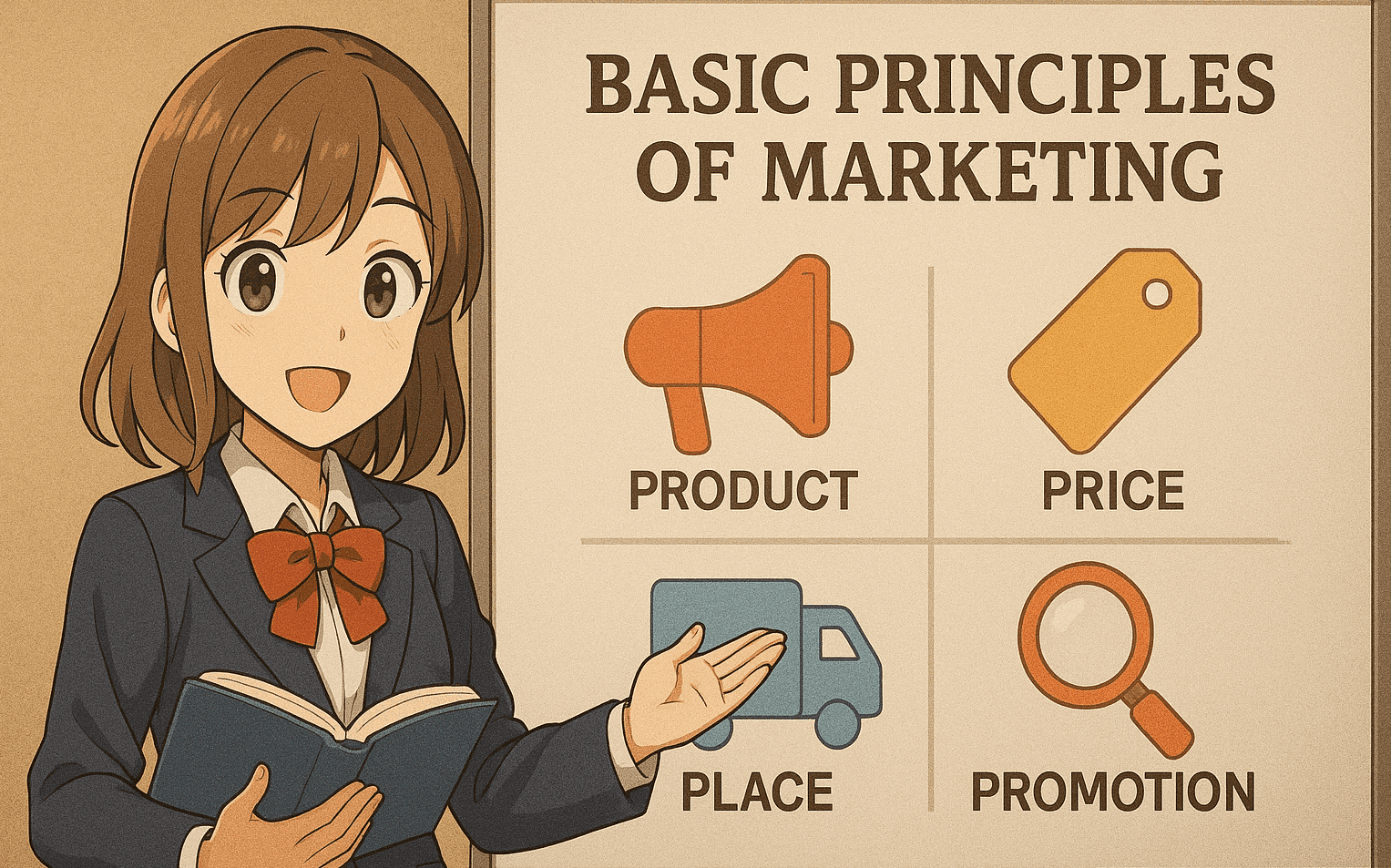
The classic "4Ps" - Product, Price, Place, Promotion - have been taught since E. Jerome McCarthy popularized them in 1960. Services often add People, Process, and Physical Evidence. The labels matter less than the logic: these are the levers you pull to deliver positioning to the real world.
Product: more than the thing in the box
Product covers the core offer and the entire experience around it - quality, packaging, warranty, onboarding, support. A streaming service with incredible shows but a painful sign-up process has a product problem, not a promotion problem. Apple designs the resistance of the iPhone box lid and the coil of the cable inside. None of that changes specs. All of it changes how the purchase feels, which is product marketing operating at the sensory level.
Price: signals, psychology, and structure
Price is never just a number. It is a signal. Pricing strategy sits at the intersection of math, psychology, and competitive positioning.
Dollar Shave Club launched at $1/month for their basic blade (plus $2 shipping). Gillette's comparable cartridge ran $3-4 per blade, and you needed four or five monthly. The price was not just lower - it reframed the entire category. Razors went from "expensive thing I resent buying" to "trivial subscription I never think about." That psychological shift mattered more than the dollar savings.
Common structures: one-time purchase (physical goods), subscription (ongoing value), tiered plans (basic/standard/pro), and freemium (free entry with a paid upgrade path). Discounts spike short-term demand but can train customers to wait for sales, so deploy them with clear intent.
Place: where the buyer meets the product
Place is distribution. Direct-to-consumer gives you control over data, experience, and margin. Marketplaces like Amazon bring traffic but shrink margin and control. Physical retail offers touch-and-try but depends on shelf space. Dollar Shave Club went online-only and shipped to the mailbox - bypassing the shelf-space wars where Gillette had a massive structural advantage. They did not fight on Gillette's turf. They built a different playing field.
Promotion: getting the message out
Promotion is the communication layer - ads, content marketing, email, SEO, social media, sponsorships, referral programs, and PR. The right mix depends on where your audience spends attention and how they make decisions. A homework-hour product does well with YouTube pre-rolls on study channels. A B2B tool generates leads through LinkedIn thought leadership. Channel selection is about where your buyers already are, not where you wish they were.
Research and Customer Insight: Replacing Guesses With Evidence
"I think our customers want..." is a sentence that precedes expensive mistakes. Strong research replaces assumptions with evidence, and it does not require a six-figure budget.
Start with sharp questions. Who is the actual buyer? What triggers their search? What objections stall the purchase? What exact words do they use to describe the problem? That last one matters more than most teams realize - using the customer's own language in your copy creates instant recognition.
Behavioral data shows what people do. Google Analytics 4 reveals pages visited, time on page, and the paths that lead to sign-up or drop-off. UTM parameters separate traffic by source. Search Console shows the queries driving clicks.
Customer conversations reveal the why. Interview five to ten qualified buyers. Ask them to recall their last purchase in this category. What happened first? What did they try? What words did they search? Write down exact phrases, not your interpretation. Those raw quotes become your best marketing copy.
Competitive review maps the territory. Study what rivals promise, how they price, and where they struggle (their 1-star reviews are gold). You are not looking for things to copy. You are looking for gaps.
Netflix runs roughly 250 A/B tests per year on everything from thumbnail images to recommendation algorithms. They discovered that artwork showing an expressive face outperformed landscape shots by significant margins - which is why most Netflix thumbnails now feature close-up human expressions. Not a creative hunch. Data from millions of viewing sessions, tested methodically. Small businesses can apply the same logic at smaller scale: test one variable, measure one outcome, ship the winner.
Messaging That Cuts Through Noise
The average person encounters somewhere between 4,000 and 10,000 brand messages per day. Most vanish instantly. The ones that stick connect a specific problem to a specific solution with specific proof, in the reader's language, not the marketer's.
Watch the difference. Weak: "Our app helps students learn faster." Every education app claims this. Sharp: "Finish a 20-question algebra set in under ten minutes with instant feedback and spaced review that sticks for exam day." Add proof: "82% of students who complete three sets per week report higher grades within one month." Add action: "Start free. No card required." Each element answers a doubt. What does it do? Does it work? How do I try it?
Tone matters enormously. Dollar Shave Club's "Our blades are f***ing great" worked because it matched the irreverent voice of frustrated 25-year-old men. That same line would destroy a financial literacy course aimed at parents. Matching voice to audience is not style. It is strategy.
The Funnel: From Stranger to Advocate
A buyer moves through stages. Different questions dominate their mind at each one, and different metrics tell you whether the system is working.
The buyer discovers a problem or your brand. Metrics: impressions, reach, brand search volume. Tools: social content, PR, SEO, paid ads.
They evaluate options, compare features, read reviews. Metrics: click-through rate, time on site. Tools: landing pages, comparison content, email sequences.
They commit. Metrics: conversion rate, average order value, cart abandonment. Tools: checkout optimization, clear calls to action.
They come back. Metrics: repeat rate, churn, customer lifetime value. Tools: CRM systems, loyalty programs, ongoing email.
They tell others. Metrics: referral rate, Net Promoter Score. Tools: referral incentives, shareable experiences.
Here is where math gets interesting. If a landing page gets 1,000 visits and 50 people sign up, the page converts at 5%. A single rewrite that bumps sign-ups to 65 moves the rate to 6.5%. Over a year, the same traffic produces 180 extra customers without a single additional dollar in ad spend. Multiply that by customer lifetime value and you see why optimizing existing funnels often beats chasing new traffic.
5x — Acquiring a new customer costs roughly 5 times more than retaining an existing one - which is why the retention and referral stages matter as much as the top of the funnel
Pricing Without Guesswork
Pricing is where psychology and spreadsheets collide. You need reference points (what else could the buyer spend this money on), perceived value (how much they believe your product is worth), and a structure that fits the use case.
Cost-plus starts with costs and adds a markup. Simple. Safe. Can leave money on the table if buyers would pay more. A $12 candle that costs $3 to make is not overpriced if the buyer values the ambiance at $20.
Value-based starts with the buyer's gain - saved time, improved outcomes, avoided pain - and prices below that value so the buyer still feels they won. If software saves a business 10 hours monthly at $50/hour, it creates $500/month in value. Price it at $99/month and you hand them a 5:1 return. Easy yes.
Tiered offers basic, standard, and premium. The middle tier typically generates the most revenue - it anchors between "too limited" and "more than I need," making it feel like the sensible pick.
Place a higher-priced option first and the standard option looks reasonable by contrast. Restaurants put a $62 steak at the top of the menu so the $28 pasta feels sensible. SaaS companies show the Enterprise plan at $299/month so the Pro plan at $79/month looks like a bargain. Behavioral economics calls this anchoring bias, and it operates even when you know it is happening.
Brand: The Accumulation of Every Signal You Send
Brand is not a logo. It is the total set of associations that form when someone encounters your name - built from product experience, customer service, social replies, packaging, the font on the receipt, the speed of the refund.
A strong brand does something almost magical to marketing economics: it lowers the cost of every future sale. People who trust you click your ad more often, convert faster on your landing page, pay your price without comparison shopping, and forgive the occasional misstep. Brand equity is a financial asset even if it never appears on a balance sheet.
Building it takes consistency and patience. A simple brand guide keeps name, colors, fonts, tone, and behaviors aligned across every channel. Consistency builds memory. Memory builds preference. Preference lowers friction on every future purchase. Strong names share traits: easy to say, spell, and search. Visual identity should work in color and black-and-white. None of this requires a massive budget - just clear decisions and the discipline to hold them.
Measurement, Analytics, and Learning Loops
Set up analytics before you launch. Not after. Before. Every visit and action should have a source tag from day one, because reconstructing data retroactively is somewhere between painful and impossible.
GA4 tracks events - page views, clicks, form submissions, purchases. Tag Manager adds new tracking without code changes. UTM parameters record campaign, source, and medium. A CRM connects leads to later stages so you can calculate which channel produces customers, not just clicks.
Pick a single primary metric per test. Do not chase five goals at once - you will optimize for nothing. Run tests for a set window, wait for a meaningful sample size, then ship the winner.
The learning loop: observe, hypothesize, test one change, measure, document. That last step is the one most teams skip, and it is the one that separates steady growers from teams repeating the same mistakes every quarter. A shared document with date, change, and outcome is enough. Nothing fancy. Just honest records.
Case Study: How Dollar Shave Club Rewrote the Rules
The DSC story deserves a full breakdown because every principle in this article plays a visible role.
The market: U.S. men's razor market, roughly $3 billion. Gillette (70% share) and Schick (15%) competed by adding more blades and charging premium prices. Innovation had become performative.
The insight: A large segment cared about cost, convenience, and not feeling ripped off - not blade count. The job was "keep my face smooth without thinking about it or paying too much."
The positioning: Affordable razors, delivered to your door. No trips to the store. No locked display cases. No pretending 5 blades matter more than 4.
The channel: A single YouTube video, March 6, 2012. Warehouse-tour format felt authentic and low-budget by design. The video went viral - 12,000 orders in 48 hours, 25 million views eventually.
The result: 3.2 million subscribers by 2016. Unilever acquisition for $1 billion cash. Gillette forced to launch its own subscription and cut prices up to 12%.
Every chapter maps back to fundamentals. They segmented by frustration, not demographics. Positioned against the experience, not the product. Chose a channel rewarding authenticity over production value. Priced to reframe expectations. And measured relentlessly, expanding into adjacent grooming products as data revealed new jobs their customers needed done.
Common Mistakes and How to Dodge Them
Teams rush into tactics without a clear positioning statement, then wonder why nothing resonates. They pick channels by copying competitors rather than by studying where their audience actually spends time. They write copy to impress internal reviewers instead of connecting with buyers. They ask for phone number, company name, and job title on a form that only needs an email address.
They change three variables at once and cannot tell which one moved the result. They ignore support tickets and 1-star reviews, which are free market research written in the customer's own words. They treat follower counts as success when the actual goal is revenue.
Every mistake traces back to skipping a fundamental step. The antidote is the same: slow down at the start. Clarify the who, the problem, the message, and the proof. Then accelerate during execution and testing.
Worked Example: A Student Notebook Brand From Scratch
A team launches a notebook for students juggling multiple subjects. Thick paper, color strips on page edges so you can sort notes by math, history, or science at a glance.
Competitive scan: every brand emphasizes covers and aesthetics. Nobody talks about page organization or exam-day retrieval speed. Gap found.
Positioning: For high school students who juggle many classes, our notebook sorts notes by subject with instantly visible color edges, which means faster recall before quizzes. Unlike standard lined pads, it keeps weeks organized across classes without extra tabs or apps.
Product: color edge system, sticky index pack, fold-flat spine. Price: two tiers, basic and premium with extra index tabs. Place: their own site plus a test with two school supply retailers. Promotion: three short videos - a locker cleanup showing the color system, a 10-minute study sprint where the student flips to the right week instantly, a parent packing a bag the night before an exam.
Ten student interviews and five parent conversations surface key priorities. Students care about speed. Parents care about durability. The team adds a strength demo and an animated loop of color-coded edges. GA4 configured. Links carry UTM tags. Landing page headline: "Find any note in 3 seconds."
Week one: 2,000 visits from TikTok, Instagram, and search. Landing page converts at 4%. A new hero photo showing color edges more prominently pushes conversion to 5.2%. Bundling extra index tabs and raising the price by $2 increases average order value. Reviews highlight tabs as especially useful during finals. The team documents every test and outcome. Retailers expand shelf space. The loop continues.
Tools Worth Picking Up Early
Spreadsheets remain the most versatile marketing tool. Learn filters, pivot tables, percent-change formulas, and basic funnel tracking. For web projects, learn GA4 and UTM tagging. For outreach, pick up a simple email platform. For creative, learn phone video editing (CapCut handles 90% of social content needs) and a tool like Canva for thumbnails. For data analysis, learn to pull themes from interview notes and read dashboards without drowning in vanity metrics. For understanding buyer psychology underneath it all, study consumer choice theory.
How Marketing Connects to Everything Else
Marketing borrows from nearly every discipline. Math powers the analytics - percentages, ratios, growth rates, statistical significance. Writing determines whether your message lands or fades. Data skills from computer science help you find patterns hiding in numbers. History and geography explain why products succeed in certain markets at certain times. Psychology illuminates attention, memory, and the biases making humans predictably irrational.
A marketer who understands sales psychology writes better landing pages. One who understands statistics avoids celebrating noise as signal. One who understands history spots patterns others miss. The more fluency you build across subjects, the sharper your instincts become.
That is the foundation. Not a checklist to memorize, but a way of seeing. Every product on every shelf, every ad in every feed, every price on every menu is the result of someone working through the system described here. Once you understand how it operates, you stop being a passive target and start being someone who can build, evaluate, and improve marketing with clear eyes and honest data. That skill applies far beyond selling things. It applies to selling ideas, rallying teams, launching projects, and communicating anything that matters to anyone who should care about it.