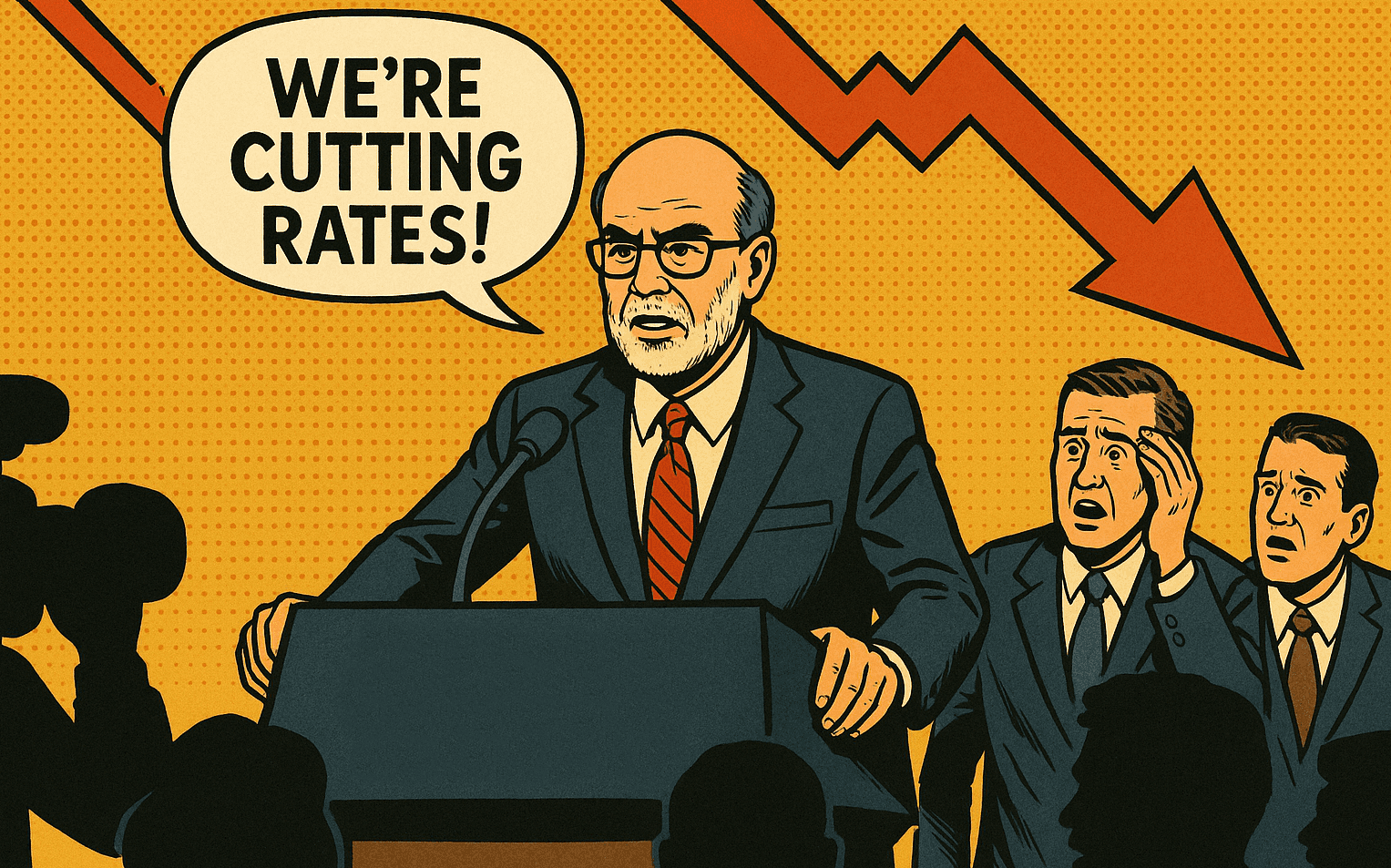
In March 2022, the U.S. Federal Reserve set its benchmark rate at 0.25%. By July 2023, that number had climbed to 5.50% - the fastest tightening cycle in four decades. Mortgage rates doubled. Car loans jumped. Credit card APRs crossed 20%. Yet unemployment barely twitched, hovering near 3.6%. How does one institution, adjusting one short-term interest rate, ripple through a $27 trillion economy without flipping it upside down?
That question sits at the heart of monetary policy - the set of tools, signals, and judgments a central bank deploys to steer inflation, employment, and financial stability. It is not magic. It is not guesswork. It is a craft built on a handful of powerful levers, clear communication, and a deep respect for the lag between action and result. Once you understand how those levers connect to your mortgage payment, your job prospects, and the price of groceries, you stop treating rate decisions as abstract headlines and start reading them as signals you can act on.
525 bps — Total Fed rate increase from March 2022 to July 2023 - the steepest hiking cycle since the early 1980s under Paul Volcker
The Central Bank Mandate - What Monetary Policy Actually Tries to Do
Every central bank operates under a mandate, and those mandates vary more than most people realize. The U.S. Federal Reserve carries a dual mandate: maximum employment and stable prices. The European Central Bank prioritizes price stability first, with support for the broader economy as a secondary objective. The Bank of England targets 2% CPI inflation, with a "remit" letter from the Chancellor outlining additional considerations. Different words, but the destination looks similar: keep inflation low and predictable, keep people working, and prevent the financial system from seizing up.
Why does price stability matter so much? Because inflation is a hidden tax on planning. When prices jump unpredictably, a business cannot price a two-year contract with confidence. A family cannot budget for next year's rent. A retiree watches purchasing power erode with each grocery run. Stable prices let contracts mean what they say and let savings hold their value. That predictability is the foundation on which everything else - hiring, investing, borrowing, building - rests.
Maximum sustainable employment is the other pillar. Not zero unemployment (that would mean an overheated economy sprinting toward inflation), but a labor market where anyone who wants work can find it without wages spiraling beyond what productivity supports. Economists call this the natural rate of unemployment, and it shifts over time with demographics, technology, and labor market structure.
Goals: Maximum employment AND stable prices, weighted equally
Inflation target: 2% PCE (Personal Consumption Expenditures), with "average inflation targeting" since 2020
Key rate: Federal funds rate (currently 4.25%-4.50% as of early 2025)
Decision body: FOMC (12 voting members), meets 8 times per year
Goals: Price stability as primary objective; supports economic growth secondarily
Inflation target: 2% HICP (Harmonised Index of Consumer Prices), symmetric since 2021
Key rate: Deposit facility rate (3.00% as of early 2025, after cuts from 4.00%)
Decision body: Governing Council (26 members, rotating votes), meets every 6 weeks
Financial stability sits as the third, often unspoken, pillar. A central bank can hit its inflation target and still preside over a catastrophe if the payment system freezes or a wave of bank failures destroys credit. The 2008 financial crisis drove that lesson home permanently. Today, every major central bank monitors leverage, asset valuations, and funding markets as part of the policy equation - not as the primary target, but as the guardrail that keeps the other goals achievable.
The Policy Rate - One Number That Moves Everything Else
Strip away the complexity and monetary policy starts with a single lever: the policy interest rate. For the Fed, it is the federal funds rate - the rate banks charge each other for overnight lending. For the ECB, it is the deposit facility rate. For the Bank of England, the Bank Rate. The specific name changes by geography, but the function is identical. This one short-term rate becomes the anchor from which virtually every other borrowing cost in the economy takes its cue.
How does one overnight rate between banks end up affecting your 30-year mortgage? Through arbitrage and competition. Banks that can borrow overnight at 5% will not lend to each other for a week at 4%. Bond traders who see the policy rate at 5% price in expected future rates when buying two-year or ten-year government debt. Mortgage lenders who fund themselves with short-term borrowing pass those costs through to homebuyers. The chain is mechanical, not mysterious.
The central bank maintains control over this rate through a corridor system or a floor system. Under a corridor, the bank sets a ceiling (a lending rate at which banks can always borrow from the central bank) and a floor (a deposit rate at which banks can always park excess reserves). Open market operations keep the actual market rate somewhere between those bounds. Under a floor system - which the Fed has used since 2008 - the rate paid on reserves acts as the anchor directly, because banks hold so many reserves they rarely need to borrow from each other. The corridor narrows to almost nothing; the floor becomes the rate.
The Fed switched from a corridor system (scarce reserves, active daily operations) to a floor system (abundant reserves, rate set by interest on reserve balances) after 2008. This is why the Fed's balance sheet grew from roughly $900 billion to over $8.9 trillion at its peak in 2022 - all those reserves need to sit somewhere, and they sit at the Fed earning interest.
How Rate Changes Propagate Through the Economy
A 25-basis-point rate hike does not simply sit in the overnight market and wait. It propagates outward through five distinct channels, each operating on a different timeline and hitting different parts of the economy with different force. Think of it as dropping a stone into water - except the pond has five different surfaces, and the ripples travel at five different speeds.
Channel 1: The interest rate channel. This is the direct path. Higher overnight rates push up yields on Treasury bills, then notes, then bonds. Banks raise their prime lending rates. Mortgage rates climb. Auto loan APRs rise. Corporate bond yields increase. Every borrower in the economy faces higher costs, and every saver earns a better return on deposits and money market funds. The math is straightforward: higher rates mean higher monthly payments, which means fewer people qualifying for mortgages, fewer businesses greenlighting capital projects, and less consumer spending on credit-financed purchases.
Channel 2: The expectations channel. This one is subtler but arguably more powerful. When the Fed signals a rate path, markets price it in immediately - often before the actual hike happens. If businesses believe inflation will return to 2%, they set prices and negotiate wages accordingly. If households believe the central bank is serious about its target, they do not demand cost-of-living adjustments that bake in high inflation permanently. Anchored expectations do half the central bank's work for free. Unanchored expectations force the bank to hike harder and longer to achieve the same cooling effect.
Channel 3: The credit channel. Higher rates squeeze bank margins and tighten lending standards. When a bank's cost of funds rises, it becomes pickier about who gets a loan. Borderline borrowers get rejected. Credit card limits get trimmed. Small businesses that relied on revolving credit find the spigot tightening. This channel hits hardest in economies where bank lending dominates and capital markets are less developed.
Channel 4: The asset price channel. Higher discount rates compress the present value of future cash flows, which means stock prices tend to fall (or grow more slowly) and property valuations cool. When a household watches its stock portfolio drop 15% and its home equity stall, it pulls back on discretionary spending - the new kitchen renovation gets postponed, the vacation gets downgraded. Economists call this the wealth effect, and it runs in both directions.
Channel 5: The exchange rate channel. Higher domestic rates relative to foreign rates attract capital inflows, which strengthens the currency. A stronger dollar (or euro, or pound) makes imports cheaper, which helps cool domestic inflation directly. But it also makes exports more expensive abroad, which can slow manufacturing and trade-sensitive industries. For a large, relatively closed economy like the United States, this channel is moderate. For a small, open economy like Sweden or South Korea, it is enormous.
These channels do not fire simultaneously. Financial markets react within minutes. Housing and auto sales shift within 3-6 months. Business investment adjusts over 6-12 months. Wage growth and core inflation may take 12-24 months to fully respond. This is why central bankers talk about "long and variable lags" - and why they must set policy based on where the economy will be next year, not where it is today.
Open Market Operations - The Daily Mechanics of Rate Control
Every rate decision needs plumbing to become reality. That plumbing is open market operations - the buying and selling of securities to manage the supply of bank reserves. When the central bank buys government bonds from banks and dealers, it credits their reserve accounts, adding liquidity to the system. When it sells bonds, it debits those accounts, draining liquidity.
Under the old corridor framework, the Fed's trading desk in New York conducted daily operations to keep the fed funds rate within a narrow band. Too much liquidity pushed rates below target; the desk would drain reserves through reverse repos. Too little liquidity pushed rates above target; the desk would add reserves through repos. It was precision plumbing, conducted every morning before most people finished their coffee.
Under the current floor system, the mechanics are simpler but the balance sheet is vastly larger. The Fed pays interest on reserve balances (IORB) at its target rate, and that rate becomes the effective floor for overnight lending. The reverse repo facility (ON RRP) provides a secondary floor by letting money market funds and other non-bank institutions park cash at the Fed. Together, these two administered rates keep the effective federal funds rate glued to the target range without the need for constant fine-tuning.
Reserve Requirements and Standing Facilities
Some central banks still use reserve requirements - rules that force commercial banks to hold a minimum fraction of customer deposits as reserves at the central bank. China's People's Bank actively adjusts its reserve requirement ratio (RRR) as a policy tool; a 50-basis-point cut releases roughly 1 trillion yuan ($140 billion) of lending capacity into the banking system. The Fed, by contrast, dropped its reserve requirement to zero in March 2020 and has not reinstated it. The tool exists in the playbook, but the Fed's floor system makes it redundant.
Standing facilities act as the guardrails of the overnight market. The Fed's discount window is the ceiling - any bank can borrow there, but at a penalty rate (currently 50 basis points above the top of the target range), which means banks only use it as a last resort. The deposit facility rate is the floor. Between those boundaries, the overnight market operates freely. During the March 2023 banking stress following Silicon Valley Bank's collapse, the Fed created the Bank Term Funding Program (BTFP) as a supplementary facility - offering banks one-year loans at par value against Treasury and agency collateral. It was a creative adaptation of the standing facility concept, designed to stop a liquidity crunch from becoming a solvency crisis.
Quantitative Easing, Tightening, and the Balance Sheet Toolkit
When the policy rate hits the effective lower bound - that zone near zero where further cuts lose traction - the central bank reaches for a different lever: its own balance sheet. Quantitative easing (QE) means buying large quantities of longer-dated government bonds (and sometimes mortgage-backed securities or corporate bonds) to push down yields further out the curve. The mechanism works through two forces. The portfolio balance channel compels investors who sold their bonds to the central bank to reinvest in riskier assets, compressing spreads across the board. The term premium channel removes duration risk from the market, directly lowering long-term interest rates.
Purchases $1.75 trillion in Treasuries and MBS. 10-year Treasury yield falls from 3.85% to 2.25% within months. Housing market stabilization begins.
Additional $600 billion in Treasury purchases. Aimed at further lowering long-term rates after recovery stalled. S&P 500 rises 25% over the program's duration.
$85 billion per month with no preset end date. First open-ended QE program - tied to labor market improvement rather than a fixed total. Fed says it will keep buying "until the outlook for the labor market has improved substantially."
Fed Chair Bernanke hints at reducing purchases. 10-year yields spike from 1.6% to 3.0% in weeks. A lesson in how powerful expectations are - the Fed had not actually tightened yet.
Fed buys $80B/month in Treasuries and $40B/month in MBS. Balance sheet surges from $4.2 trillion to $8.9 trillion in two years. Mortgage rates hit a record low of 2.65% in January 2021.
Fed allows up to $95 billion per month to roll off (not reinvested). Balance sheet shrinks from $8.9 trillion toward roughly $7 trillion by early 2025. Long-term yields drift upward as duration returns to private portfolios.
Quantitative tightening (QT) is the reverse: the central bank lets maturing bonds roll off its balance sheet without reinvesting, or actively sells holdings. This returns duration risk to private investors, nudging long-term yields higher. The process is slower and quieter than QE - the Fed describes it as running "in the background" - but the cumulative effect is real. Between June 2022 and early 2025, the Fed's balance sheet shrank by roughly $2 trillion.
A handful of central banks have experimented with yield curve control (YCC), committing to buy whatever quantity of bonds is necessary to cap a specific yield. The Bank of Japan maintained a 0% target on the 10-year JGB for seven years (2016-2023), purchasing trillions of yen in bonds to defend it. YCC is potent but demanding - it pins the central bank's credibility to a specific number and forces unlimited purchases if markets test the cap.
Forward Guidance - When Words Become the Tool
Here is a fact that surprises most people: markets often move more on what a central bank says than on what it does. A 25-basis-point hike that was fully expected produces almost no market reaction. A single sentence hinting that the hiking cycle might pause - or extend - can move trillions of dollars in bond values within seconds.
This is forward guidance, and it is arguably the most cost-effective tool in the kit. The logic is clean: if a 30-year mortgage rate depends on the expected path of short-term rates over the next 30 years, then shaping those expectations reshapes the mortgage rate today without the central bank spending a cent or moving a single basis point on its overnight rate.
Forward guidance comes in flavors. Calendar-based guidance commits to a rate path until a specific date ("rates will remain near zero at least through mid-2013"). State-based guidance ties policy to economic outcomes ("rates will not rise until unemployment falls below 6.5%"). Qualitative guidance uses vaguer language about risks and direction ("the committee anticipates that an ongoing increase in the target range will be appropriate"). Each version trades off between clarity and flexibility. Too precise and the bank paints itself into a corner; too vague and markets learn nothing.
Guidance only works if the institution delivering it has credibility. A central bank that says one thing and does another quickly discovers that markets ignore its words and price in their own forecasts. Credibility, once lost, takes years to rebuild - and the cost of rebuilding is always higher interest rates, because markets demand a premium for uncertainty about what the central bank will actually do.
Real Rate Data - Where the Fed and ECB Stand Today
Numbers tell the story better than adjectives. Here is where the world's two largest central banks stood as of early 2025, after navigating the most aggressive tightening cycle of the 21st century.
The Fed raised rates 11 times between March 2022 and July 2023, then held at 5.25-5.50% for over a year before cutting 100 basis points in three moves (September, November, and December 2024). The ECB followed a similar arc but started later and peaked lower, reaching 4.00% on its deposit rate before cutting to 3.00%. Both banks are navigating the same puzzle: inflation is falling but not yet at target, labor markets are resilient but cooling, and the risk of cutting too soon (reigniting inflation) is balanced against cutting too late (triggering an unnecessary recession).
The divergence between the two banks matters for exchange rates. When the Fed holds rates higher than the ECB, capital flows toward dollar assets, strengthening the dollar against the euro. That has real consequences: European exporters gain competitiveness while American tourists enjoy cheaper trips to Paris, but U.S. manufacturers face stiffer competition from cheaper European imports.
Inflation Targeting and the Rules That Guide Decisions
Most central banks do not fly blind. They anchor their decisions to a formal inflation target - typically 2% for advanced economies. But what does "targeting 2%" actually mean in practice? It means the central bank adjusts its policy rate to steer inflation forecasts toward that number over a medium-term horizon, usually 1-3 years ahead. It does not mean inflation will be exactly 2% every month. It means the bank acts when forecasts deviate persistently.
The most famous rule of thumb for this process is the Taylor Rule, proposed by Stanford economist John Taylor in 1993.
Translation: the policy rate (i) should equal the neutral real rate (r*), plus actual inflation, plus half the gap between actual and target inflation, plus half the output gap. No central bank follows this formula mechanically - the real world has too many moving parts - but it captures the logic beautifully. When inflation is above target, the rule says hike. When the economy is running below potential, the rule says cut. When both inflation and the output gap are at target, the rule points to the neutral rate and says hold.
Two unobservable estimates make this tricky. R-star (the neutral real rate) is not printed on a dashboard. It must be estimated, and those estimates range from 0.5% to 2.0% depending on the model and the era. The output gap (actual GDP minus potential GDP) is similarly uncertain - potential GDP depends on labor force growth, productivity trends, and capital accumulation, all of which are measured with long lags and frequent revisions. Central banking is navigation by imperfect instruments, which is exactly why judgment, communication, and humility matter alongside the math.
Money, Credit, and Why Banks Are the Transmission Belt
Textbooks describe a neat money multiplier: the central bank creates base money, commercial banks multiply it through lending, and the money supply expands predictably. Reality is messier. In practice, banks do not wait for reserves before lending. They make loans first - creating deposits in the process - and then find reserves to satisfy regulatory requirements after the fact. The central bank accommodates this by supplying reserves at the policy rate.
This means the credit channel is not a passive amplifier of rate changes. It is an active filter. When banks are well-capitalized and confident, a rate cut translates quickly into cheaper, more available credit. When banks are capital-constrained or nervous about credit quality, that same rate cut might produce minimal new lending. The eurozone experienced exactly this problem between 2012 and 2015: the ECB pushed rates to zero and below, but bank lending in periphery countries like Italy and Spain barely grew because banks were still digesting bad loans from the sovereign debt crisis.
The 2023-2024 credit tightening: After the Fed raised rates to 5.25-5.50%, U.S. commercial banks tightened lending standards significantly. The Fed's Senior Loan Officer Opinion Survey showed over 50% of banks tightening standards for commercial and industrial loans by mid-2023. Small businesses felt it first - the National Federation of Independent Business reported that credit availability hit its lowest level since 2012. Large corporations with access to bond markets weathered the tightening far better, highlighting how the credit channel hits unevenly across firm sizes.
The payment system sits beneath all of this. Every wire transfer, every card transaction, every interbank settlement runs through infrastructure that the central bank either operates or oversees. In the United States, Fedwire processes roughly $4 trillion in transfers daily. A failure in this system would freeze commerce within hours. Protecting payment infrastructure is not glamorous, but it is existential - and it is why central banks invest heavily in operational resilience and cybersecurity.
The Zero Lower Bound and Unconventional Policy Tools
Paper currency creates a problem. If you can hold physical cash at zero interest, why would you accept a bank deposit that charges you for the privilege? This practical limit on how far negative rates can go is called the zero lower bound, and it forced central banks to invent new tools when the 2008 crisis pushed rates to the floor.
Some banks tested negative interest rates directly. The ECB pushed its deposit rate to -0.50%. The Bank of Japan went to -0.10%. Sweden's Riksbank hit -0.50%. Denmark's central bank pushed to -0.75%. The effects were real but uneven - bank profitability suffered, and the stimulative impact on lending was weaker than equivalent positive-rate cuts because banks were reluctant to pass negative rates through to retail depositors. The ECB introduced a tiering system to exempt a portion of reserves from negative rates, protecting bank margins somewhat.
Beyond negative rates, central banks deployed funding-for-lending schemes that explicitly linked cheap central bank financing to credit expansion. The ECB's TLTROs offered banks multi-year funding at rates as low as -1.00%, conditional on meeting lending benchmarks. The Bank of England's Funding for Lending Scheme provided Treasury bills to banks at subsidized rates if they maintained or expanded net lending. These programs addressed a specific bottleneck: even with low policy rates, banks might not lend if their own funding costs or risk appetite did not cooperate.
The takeaway: Unconventional tools are not random experiments. They are targeted extensions of the same transmission channels - interest rate, credit, expectations - deployed through a different door when the front entrance is blocked by the zero lower bound.
Financial Stability and Macroprudential Tools
Interest rates are a blunt instrument. Raising them cools the entire economy, not just the overheating sector. If the problem is excessive mortgage lending in one city or leverage building up in one corner of the financial system, a rate hike punishes everyone - including the factory owner in a different region whose borrowing costs just jumped for reasons that have nothing to do with his business.
This is where macroprudential policy enters the picture. These are surgical tools designed to target specific financial stability risks without distorting the broader economy. The toolkit includes loan-to-value (LTV) caps that limit how much buyers can borrow relative to property value, countercyclical capital buffers that force banks to hold extra capital during booms, debt-to-income (DTI) limits that cap borrower leverage, and stress tests that simulate adverse scenarios to ensure banks can absorb losses.
New Zealand pioneered LTV restrictions in 2013 when Auckland house prices were surging 15% annually. Canada imposed a mortgage stress test in 2018 requiring borrowers to qualify at a rate 2 percentage points above their contract rate. The UK's Financial Policy Committee actively adjusts its countercyclical buffer based on credit conditions. These tools let central banks address pockets of excess without resorting to rate hikes that would slow the whole economy.
The relationship between monetary policy and macroprudential policy is complementary. Rates manage the cycle. Macroprudential tools manage fragility. When both are calibrated properly, the economy can grow steadily without building up the kind of hidden vulnerabilities that trigger crises. When one is missing or miscalibrated, the other has to compensate - usually at a higher cost.
The Lender of Last Resort - Preventing Liquidity Crises from Becoming Solvency Crises
A perfectly healthy bank can die overnight. Not because its loans are bad or its capital is thin, but because its short-term creditors all decide to withdraw funding at the same time. This is a liquidity crisis - the bank has valuable assets but cannot sell them fast enough to meet its obligations. It is the financial equivalent of a restaurant with a full kitchen and a packed reservation list that cannot pay tonight's food delivery because the credit card machine is down.
The central bank's role as lender of last resort exists precisely for this situation. The classic framework, articulated by Walter Bagehot in 1873, is elegant in its simplicity: lend freely, at a penalty rate, against good collateral. Freely, so the panic ends. At a penalty, so banks do not treat it as cheap funding. Against good collateral, so the central bank is not subsidizing insolvent institutions.
The March 2023 episode around Silicon Valley Bank tested this framework. SVB's problem was not illiquidity in the Bagehot sense - it was a solvency issue created by massive unrealized losses on long-duration bonds. But the fear of contagion spreading to other regional banks with similar portfolios was a liquidity problem. The Fed's response - creating the Bank Term Funding Program to lend against bonds at par value - was a modern adaptation of Bagehot's principle, designed to prevent a liquidity run on the broader banking system even as the specific insolvent institutions were resolved.
The distinction between liquidity and solvency matters enormously. Lend to an illiquid but solvent bank and you save jobs, preserve the payment system, and get your money back with interest. Lend to an insolvent bank and you delay the inevitable while deepening losses that someone - depositors, taxpayers, or the broader financial system - will eventually absorb.
Exchange Rates, Capital Flows, and the Open Economy Trilemma
Monetary policy does not stop at national borders. In a world of open capital markets, every rate decision sends signals that attract or repel international capital. The framework for understanding this is the impossible trinity (also called the trilemma): a country cannot simultaneously maintain a fixed exchange rate, allow free capital movement, and run an independent monetary policy. It must sacrifice one.
The U.S., Eurozone, UK, and Japan choose this combination. The exchange rate absorbs external shocks, and the central bank sets rates for domestic conditions. The tradeoff: currency volatility can be significant, affecting exporters and importers.
Hong Kong and Denmark choose this path. Hong Kong pegs to the U.S. dollar through a currency board; Denmark pegs the krone to the euro. The tradeoff: domestic interest rates must follow the anchor currency, even when the domestic economy needs different treatment.
China historically operated near this combination, managing its exchange rate while using capital controls to maintain policy independence. The tradeoff: capital controls create friction and can be circumvented over time.
For the typical Hozaki reader, the practical implication is this: when the Fed raises rates relative to the ECB, the dollar strengthens, which makes dollar-denominated assets more attractive, European vacations cheaper for Americans, and U.S. exports more expensive for foreign buyers. When you see trade imbalances widening or narrowing, monetary policy divergence between major central banks is usually part of the story.
Fiscal Policy Meets Monetary Policy - Coordination and Conflict
Central banks do not operate in a vacuum. Fiscal policy - government spending and taxation - shapes the economic environment that monetary policy must navigate. When both policies pull in the same direction, the effect is amplified. When they conflict, the result is friction, higher costs, and slower progress toward either goal.
The ideal coordination looks like this: in a recession, the government increases spending or cuts taxes to boost demand while the central bank cuts rates to lower borrowing costs. The combined stimulus lifts the economy faster than either tool alone. In an overheating economy, fiscal restraint (lower spending, higher taxes) reduces demand pressure while the central bank raises rates. The dual brake is more effective and less painful than either tool working alone.
The dangerous configuration is fiscal dominance - a situation where government debt is so large and deficits so persistent that the central bank feels pressured to keep rates low to manage debt service costs, even when inflation demands higher rates. This erodes the central bank's independence and its credibility. If markets believe the central bank will always accommodate fiscal expansion, inflation expectations become unanchored, and the cost of restoring price stability escalates dramatically. Argentina, Turkey, and Zimbabwe have all illustrated this dynamic in recent decades.
The U.S. experienced a milder version of this tension in 2021-2022. Massive pandemic fiscal spending (roughly $5 trillion in relief packages) poured fuel into an economy already rebounding, while the Fed kept rates at zero until March 2022. The lag in tightening contributed to inflation reaching 9.1% in June 2022 - the highest reading in 40 years. Whether the Fed moved too slowly is debated, but the episode reinforced that monetary policy alone cannot offset the inflationary impact of sustained fiscal expansion.
Housing, Durables, and Rate-Sensitive Sectors
Not every corner of the economy feels rate changes equally. Some sectors are exquisitely sensitive; others barely notice.
Housing is the poster child. The average 30-year fixed mortgage rate in the U.S. swung from 2.65% in January 2021 to 7.79% in October 2023. On a $400,000 loan, that is the difference between a $1,614 monthly payment and a $2,868 monthly payment - a 78% increase in cost for the same house. Existing home sales plunged from an annualized rate of 6.5 million in January 2022 to 3.85 million by October 2023. Housing starts dropped 25%. The rate channel hit housing like a freight train.
Auto sales follow a similar pattern. The average new car loan rate climbed from 4.1% to over 7.5% during the tightening cycle. Combined with elevated vehicle prices, the average monthly payment on a new car crossed $730 by late 2023 - a level that priced out millions of buyers. Used car markets, already inflated by pandemic-era supply shortages, cooled as financing costs climbed.
Business investment responds with more lag. A factory expansion takes years to plan and execute. A company that greenlit a $200 million project at 3% borrowing costs is not going to cancel it when rates hit 5% - the project is already underway. But the next project might not get approved. This is why business investment tends to slow 6-18 months after rate hikes begin, not immediately.
Government spending is the least rate-sensitive in the short run because governments borrow at different terms and face different constraints than households or businesses. But over time, higher rates increase national debt service costs, which consumes budget space that might otherwise fund programs or tax cuts. U.S. net interest payments on federal debt hit $882 billion in fiscal year 2024 - surpassing defense spending for the first time.
Communication and Credibility - Why Central Bank Words Move Markets
A central bank that explains its reaction function clearly builds a reservoir of credibility that makes every subsequent decision more effective. The reaction function is simply the stated logic: "When inflation is above target, we will tighten. When unemployment is elevated and inflation is at or below target, we will ease. Here are the data we watch and here is how we weigh them."
This matters because credibility acts as a force multiplier. When the Fed says it will keep fighting inflation until the job is done, and markets believe it, long-term inflation expectations stay anchored near 2%. That means businesses keep pricing modestly, workers do not demand large catch-up raises, and the Fed needs fewer actual rate hikes to achieve the same cooling effect. Conversely, when a central bank lacks credibility - whether due to past broken promises, political interference, or inconsistent communication - every rate decision must be larger to have the same impact, because markets assume the bank will blink at the first sign of economic pain.
The Fed learned this lesson through hard experience. In the 1970s, stop-and-go policy under Arthur Burns allowed inflation expectations to ratchet higher with each cycle. It took Paul Volcker's brutal tightening in 1980-1982 - pushing the fed funds rate to 20% and triggering a deep recession - to break the cycle and restore credibility. The cost of lost credibility, measured in unemployment and output, was staggering.
Four Myths About Monetary Policy You Can Retire Today
"Money creation always causes inflation." Over the long run, if the money supply grows persistently faster than real output, prices will rise. But the short run is full of nuance. The Fed roughly doubled the monetary base between 2008 and 2014, yet inflation averaged below 2% for most of that period. Why? Because banks sat on excess reserves rather than lending aggressively, and the velocity of money (how fast each dollar circulates) collapsed. You need the full picture - money supply, velocity, credit demand, and slack - before calling the outcome.
"Rate hikes always kill growth." Tightening is designed to cool the economy, and it does. But "cool" and "kill" are different outcomes. The 2022-2023 hiking cycle brought inflation down from 9.1% to under 3% while unemployment stayed below 4.2%. GDP growth continued, albeit at a slower pace. When expectations are well-anchored and the labor market has a cushion, the economy can absorb significant tightening without recession. Not always, but more often than pessimists expect.
"Central banks set mortgage rates." They set the overnight rate. Mortgage rates are determined by bond markets, which price in expected future policy rates, inflation risk premiums, and prepayment risk. The central bank influences all of those through its actions and communications, but the connection is indirect. There have been periods when the Fed raised its rate and mortgage rates barely moved, or even fell, because long-term inflation expectations improved.
"QE is just printing money." QE changes the composition of private sector portfolios - swapping bonds for reserves - and compresses term premiums. Whether it generates inflation depends on whether the resulting easing of financial conditions translates into demand that exceeds the economy's productive capacity. In 2010-2014, it did not, because the output gap was enormous. In 2020-2021, combined with massive fiscal stimulus and supply disruptions, it contributed to the inflationary surge. The tool is powerful, but context determines the outcome.
How to Read a Rate Decision Like an Operator
Every six weeks, the FOMC releases a statement, and eight times a year, it holds a press conference. Here is a practical framework for extracting signal from the noise in under five minutes.
Did they raise, cut, or hold? Was the vote unanimous? Dissents signal internal debate about direction. Two dissents favoring a hike when the majority held means the hawks are pushing - watch for a hike next meeting.
The statement describes current conditions in inflation, employment, and growth. Watch for upgraded or downgraded language: "solid" job gains versus "moderate" job gains signals a meaningful shift in how the committee views the labor market.
Look for phrases about "further" moves, "pace" of changes, and risk balance. "The Committee anticipates that ongoing increases will be appropriate" is hawkish. "The Committee will proceed carefully" is a signal to slow or pause.
Four times a year, FOMC members project where they expect rates to be at year-end. The median dot is the headline number. But the dispersion matters too - a wide spread of dots means deep uncertainty about the path ahead.
If your firm carries variable-rate debt, model the impact of the projected path on interest expense. If you sell rate-sensitive products (homes, cars, appliances), adjust your demand forecasts. If you are hiring, consider whether tightening conditions will cool your industry's demand pipeline in 6-12 months.
That framework turns a 900-word FOMC statement into an actionable two-paragraph brief you can send to your team. It beats an hour of cable news speculation every time.
A Field Glossary Worth Keeping
| Term | Plain-English Definition |
|---|---|
| Policy rate | The overnight interest rate set by the central bank - the anchor for all other rates |
| Corridor / Floor system | The structural framework that keeps overnight market rates near the policy target |
| Open market operations | Buying or selling securities to manage the supply of bank reserves |
| Standing facilities | Lending and deposit windows that cap and floor overnight rates |
| Quantitative easing (QE) | Large-scale asset purchases to lower long-term yields when short rates are at the floor |
| Quantitative tightening (QT) | Allowing the balance sheet to shrink by not reinvesting maturing bonds |
| Forward guidance | Communication about the expected future path of policy rates |
| Core inflation | A price measure that strips out volatile food and energy to reveal the underlying trend |
| Output gap | The difference between actual GDP and the economy's estimated potential |
| R-star (r*) | The neutral real interest rate that neither stimulates nor restricts growth |
| Taylor Rule | A formula linking the policy rate to inflation and output deviations from target |
| Lender of last resort | Central bank liquidity support to solvent institutions against good collateral |
| Macroprudential policy | Targeted financial regulations (LTV caps, capital buffers) that address specific risks |
| Impossible trinity | The tradeoff: a country cannot have fixed exchange rates, free capital flows, and independent monetary policy simultaneously |
| Fiscal dominance | When large government debts pressure the central bank to keep rates artificially low |
Monetary policy is not a spectator sport. Every rate decision, every forward guidance signal, every balance sheet adjustment ripples through the economy and eventually reaches your mortgage payment, your job security, and the prices you pay at the register. The central bankers making these calls are not oracles - they are technicians working with imperfect data, uncertain models, and long lags between action and outcome. But the framework they operate within is logical, learnable, and deeply practical. Understand the transmission channels. Watch trend inflation, not monthly noise. Map rate changes to the sectors that matter in your life. Keep scenarios ready. And when the next rate decision drops, you will not be guessing - you will be reading.