Racing Games - Play Free HTML5 Games Online
Browser-based racing breaks with free HTML5 games. Play instantly on mobile and desktop—steer, finish a run, then get back.
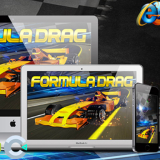


Racing Games – Fast Rounds, Instant Browser Play
Racing games are a clean kind of intensity. They compress attention into a simple loop: start, steer, react, finish. Even when the track is short, the feeling is clear. Your brain focuses on timing, spacing, and small decisions made quickly. That makes racing games unusually effective as short breaks, especially when your day is filled with reading, studying, planning, or long stretches of screen work. A few minutes of controlled speed can reset your attention without dragging you into a complicated system.
Inside Hozaki, racing games have a specific role. Hozaki is an educational platform, and breaks are part of staying productive. The wrong kind of break can scatter you. The right kind of break can refresh you. Racing games often land in the “refresh” category because they demand presence. You can’t half-play a race while mentally wandering. You either steer and react or you crash. That immediate feedback is the point. It pulls your focus back into the moment, then lets you step away when the race is done.
HTML5 games make this style of break practical. HTML5 is a web standard that browsers can run directly, which is why these are browser-based games that don’t require downloads or installation. You can play instantly on mobile or desktop, get a short session, and close the tab when you’re done. The low friction matters. If starting a break takes effort, you postpone it until you’re tired. If the break starts instantly, you take it at the right time—before your focus collapses and your work becomes slower than it needs to be.
Free HTML5 games also fit modern schedules. People don’t always have a clean hour to relax. Most days are made of small gaps: a few minutes between tasks, a short pause before a meeting, a break after finishing a study block. Racing games are built for those gaps. Many are structured around quick rounds, short tracks, and repeat attempts where you try to improve your time. That structure gives you a natural stopping point. One race, two races, done. It’s a contained activity, not an endless feed.
Racing games also provide a different mental “texture” than other breaks. Social media pulls attention outward and keeps it fragmented. Long videos can be relaxing, but they often turn you passive and make it harder to re-engage with work. Racing is active and narrow. You track the road, the edges, the corners, the obstacles. You adjust speed, timing, and direction. That narrow focus can feel like resetting a device by turning it off and on again. It’s not deep thinking, but it’s clean thinking. Your brain gets a clear task that ends quickly.
There’s a simple skill component here that makes racing satisfying without being demanding. Even in a basic racing loop, you improve through small refinements: braking a little earlier, taking a corner tighter, avoiding a hazard, picking a better line. Those small improvements are measurable and immediate. That’s why racing games can feel rewarding even in short sessions. You don’t need to invest hours. You feel progress quickly, and progress is a powerful reset when your day has been filled with abstract work where progress is harder to see.
Racing games also adapt well to different devices. On desktop, keyboard controls can feel precise and responsive. On mobile, touch controls can make steering feel direct and casual. HTML5 games are designed to run across both environments, which means you can take the same kind of short break whether you’re on a phone or a computer. That cross-device compatibility is one of the best reasons to use browser-based games as breaks. You don’t need to maintain separate apps, logins, or updates. You just play.
Different racing styles suit different moods, and that variety is useful. Some racing games are pure time trials where you chase your best lap. Some are obstacle-heavy and feel like a reaction challenge. Some are more arcade-like, focusing on quick turns and simple rules. Some feel closer to driving or simulation, where control and pacing matter more than constant speed. All of these can work as short breaks as long as the game stays readable and doesn’t demand long sessions to feel satisfying. The aim is quick clarity, not extended commitment.
Curation matters here because racing games can go either way. A clean racing game is smooth: it loads quickly, controls reliably, and lets you restart instantly. A messy one is the opposite: long loading, awkward controls, too much friction, or confusing visuals. In an educational platform, friction defeats the purpose. The ideal racing break is the kind you can start and finish without thinking about the interface at all. You get the mental reset, not an extra problem to solve.
If you want to use racing games as a healthy break tool, keep sessions short and deliberate. One or two quick races are usually enough to refresh attention. Stop while it still feels light. That’s the difference between a break that supports your day and a break that steals your day. With free HTML5 games that you can play instantly in your browser on mobile and desktop, it’s easy to keep the experience simple. Take a short race, enjoy the focus and momentum, then step back into learning or work with a calmer mind and sharper concentration.